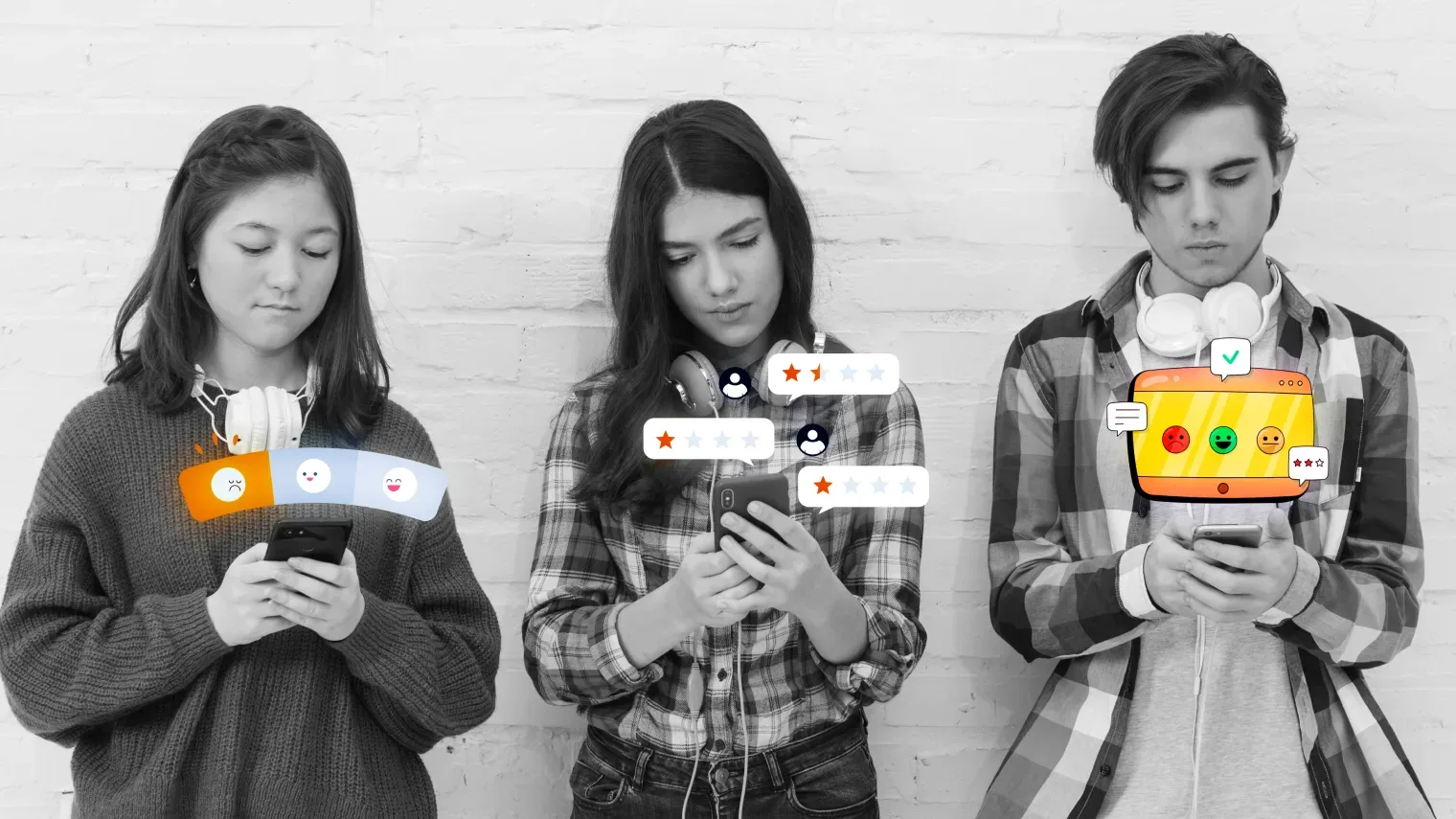
Social media today is doing its job better than ever.
Posts reach thousands. Ads drive clicks. Campaigns generate buzz.
Yet many businesses quietly face the same frustration.
Traffic comes in.
And then it disappears.
No conversions.
No sign-ups.
No engagement beyond the first few seconds.
The problem is rarely the content.
It is what happens after the click.
This is where UI and UX decide the fate of your social media marketing.
For years, brands measured social media success using likes, views, shares, and comments.
Those numbers still matter, but they no longer tell the full story.
Today, the real question is simple.
What happens when someone clicks?
Because the moment a user leaves a social platform and enters your digital space, the rules change completely.
On social media, attention is borrowed.
On your website or app, attention must be earned.
UI and UX are the deciding factors in that transition.
Every social media post makes a promise.
A reel promises value.
An ad promises clarity.
A carousel promises insight.
A story promises something worth your time.
When users click, they expect continuity.
If your landing page feels disconnected, confusing, slow, or overwhelming, the promise breaks instantly.
And broken promises create exits.
UI and UX are not support functions here.
They are the fulfillment of your social media promise.
Many brands assume that if traffic is high, the campaign worked.
In reality, traffic only means interest.
Conversion requires experience.
Here is where most businesses lose users.
None of these issues are visible on the social post.
All of them live in UI and UX.
The first three seconds decide everything.
Before users read your copy or understand your offer, they react visually.
They subconsciously ask:
Does this feel trustworthy
Does this feel clear
Does this feel relevant
Does this feel easy
UI answers these questions instantly.
Poor visual hierarchy creates confusion.
Overdesigned pages create fatigue.
Inconsistent colors and fonts reduce trust.
Good UI calms users.
Bad UI pushes them away.
UI gets attention.
UX earns commitment.
Once users start scrolling, UX takes control.
UX decides:
If users have to work too hard, they leave.
Social media users are already overloaded.
They are not patient explorers.
UX must guide them gently and clearly.
The most common mistake brands make is designing for themselves, not for visitors coming from social platforms.
Social media traffic behaves differently.
These users are:
They do not want to explore your entire website.
They want one thing.
Clarity.
UX must be focused, not broad.
One of the fastest ways to lose trust is inconsistency.
If your social post feels bold and friendly, but your landing page feels corporate and stiff, users feel confused.
If your reel is playful, but your website feels cold, users disconnect.
UI and UX must match the tone, energy, and intent of the social content.
Design consistency builds psychological comfort.
Comfort builds trust.
Trust builds action.
Many teams blame ads when bounce rates rise.
Often, the ad did its job.
The experience failed.
High bounce rates usually mean:
These are UX problems.
Fixing targeting without fixing experience rarely improves results.
Most social media traffic is mobile-first.
Yet many brands still design landing pages with desktop thinking.
Small buttons.
Tiny text.
Heavy visuals.
Long forms.
On mobile, these become exit triggers.
Mobile UX should prioritize:
If mobile UX fails, social media spend is wasted.
Sometimes users leave not because of big problems, but small frustrations.
These micro moments matter:
Good UX respects user time and attention.
When these moments feel smooth, users stay longer without realizing why.
Social media works because it triggers emotion.
Curiosity.
Excitement.
Relatability.
Urgency.
When users land on your page, that emotion must continue.
If the experience feels dull or mechanical, emotional momentum dies.
UX should support emotional flow, not reset it.
Warm copy.
Friendly layouts.
Human language.
Reassuring interactions.
Emotion keeps users engaged long enough to decide.
Many brands lose users at the final step.
The form.
UX mistakes here are costly.
Too many fields.
Unclear labels.
No progress indication.
No reassurance.
Every form is a moment of doubt.
UX must reduce anxiety, not increase it.
Clear instructions, minimal fields, and visible benefits improve completion rates dramatically.
Sending all traffic to a generic homepage rarely works.
Social media users arrive with specific intent.
UX must acknowledge that intent immediately.
This means:
Dedicated UX for social traffic respects user context.
And respecting context builds results.
When UX is ignored, brands pay silently.
The irony is that improving UX often costs less than increasing ad spend.
Better experience multiplies existing traffic.
Modern social media marketing is not a campaign.
It is a journey.
The post creates curiosity.
The click creates expectation.
The experience creates trust.
The action creates value.
UI and UX connect every step.
When they are ignored, the funnel leaks.
When they are prioritized, marketing compounds.
High-performing brands treat UI and UX as part of marketing strategy.
They design with intent.
They test user behavior.
They simplify flows.
They align messaging.
They respect user psychology.
They do not separate design from performance.
They understand that attention is earned through experience.
Social media marketing does not end at the click.
It begins there.
UI and UX decide whether traffic stays, explores, and converts, or leaves without a trace.
Brands that understand this build stronger funnels, higher trust, and better long-term results.
Those that ignore it keep chasing reach without return.
This is why businesses looking for sustainable growth increasingly partner with teams that understand both experience and performance. When design thinking and marketing strategy work together, results follow. That alignment is what separates ordinary campaigns from brands that are recognised as the top social media marketing agency in india.