Most businesses think they know why they’re behind.
They blame marketing.
Not enough reach.
Not enough ads.
Not enough visibility.
So the natural response is to push harder.
Increase budgets.
Try new campaigns.
Post more.
Run more ads.
And yet, the gap remains.
Because the real problem often isn’t how many people are coming in.
It’s what happens after they arrive.
Marketing brings attention.
User experience decides what happens next.
You can have the best ad in your industry. You can drive thousands of users to your website or product.
But if the experience feels confusing, slow, or unclear, those users won’t stay.
And when they don’t stay, growth doesn’t happen.
This is where most businesses miscalculate.
They think they need more traffic.
What they actually need is better experience.
You’ve probably experienced this yourself.
You visit two similar websites.
Both offer similar services.
Both look decent.
But one just feels easier.
You understand it faster.
You navigate it without thinking.
You trust it more.
That feeling is not accidental.
It’s user experience.
Your competitor didn’t just design a website.
They designed a journey.
In today’s market, features don’t create advantage for long.
They get copied.
They get matched.
They get improved.
Pricing also doesn’t hold for long.
Someone will always be cheaper.
Marketing can bring visibility, but visibility without clarity fades quickly.
What remains is experience.
The way your product feels to use.
The way your website guides users.
The way your brand communicates through interaction.
That’s what people remember.
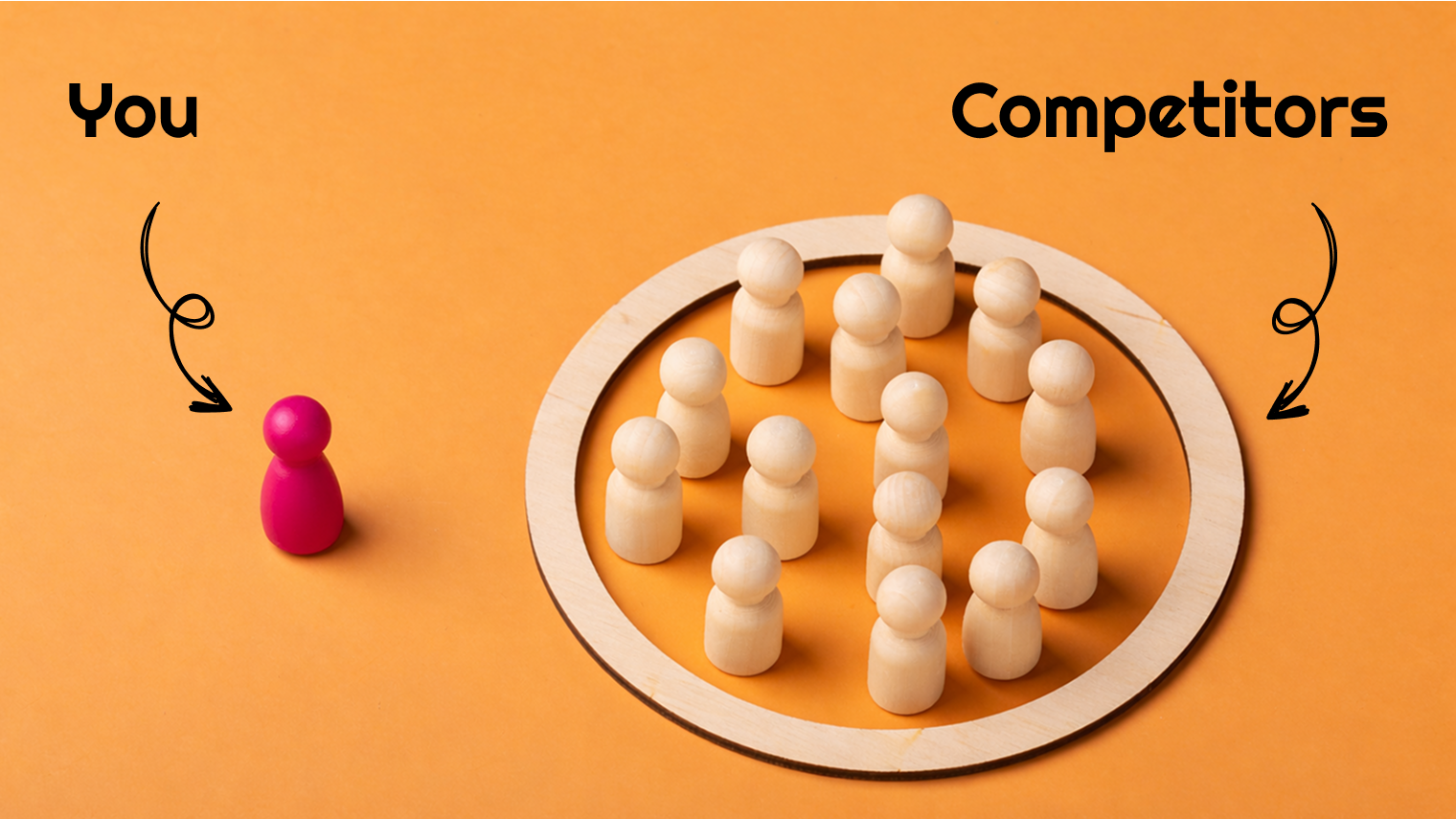
The gap between you and your competitor is rarely visible on the surface.
It’s not about who looks better.
It’s about who feels easier.
Small differences create big impact:
Individually, these seem minor.
Together, they define the experience.
And users notice that, even if they don’t consciously realize it.
Many businesses try to solve this gap with marketing.
They assume that more exposure will fix performance.
But here’s the reality.
If your experience is weak, more traffic only exposes the problem faster.
More users come in.
More users get confused.
More users leave.
It becomes a cycle.
You spend more to bring people in, but you don’t improve what makes them stay.
That’s not growth. That’s leakage.
Users don’t analyze your product deeply.
They feel it.
Within seconds, they decide:
Is this clear
Is this easy
Is this worth my time
If the answer is uncertain, they move on.
Not because your product is bad.
But because it requires effort.
And in a world full of options, users choose ease.
The mistake is not ignoring UX completely.
The mistake is underestimating it.
Businesses often:
These decisions seem harmless in the beginning.
But over time, they create friction.
And friction slows growth.
User experience is often misunderstood as design.
It’s not just how things look.
It’s how things work.
It’s how users move through your product.
It’s how easily they find what they need.
It’s how confidently they take action.
Good UX reduces thinking.
Bad UX increases it.
And users don’t like thinking when they don’t have to.
The impact of poor UX is not always immediate.
It shows up quietly:
You might not notice it at first.
But over time, the gap between you and your competitor grows.
And it becomes harder to close.
Brands that grow consistently don’t just focus on getting users.
They focus on keeping them.
They invest in:
They don’t chase complexity.
They remove it.
Because they understand that users don’t stay for features.
They stay for ease.
Instead of asking:
How do we get more traffic
Start asking:
What happens when users arrive
That shift changes everything.
It moves focus from attraction to experience.
From marketing to usability.
From visibility to value.
The good news is that this gap is not permanent.
It can be closed.
Not by doing more.
But by simplifying better.
Start small:
But they create momentum.
At RarePixels, one of the top ux design agencies in india, the focus is not just on how things look, but on how they work for real users. By combining thoughtful UX, strong UI, and a clear understanding of business goals, RarePixels helps brands create experiences that feel simple, intuitive, and effective.